
Brazilian jiu-jitsu
Build your game, don't collect techniques.
Put together the game you actually play. Log what happens to it in training. See what works, what keeps stopping you, and what to do about it.
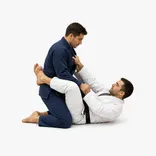
Your game
A connected system, not a list
My Game is organised around six areas. Add the attacks, escapes and transitions you actually play, and you can see where your game is real and where it stops.
- Add from the library, or from what you logged in training.
- Each one sits at the position you play it from.
- A position with nothing in it is a position to work on.
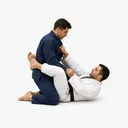
Guard
14 techniques
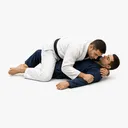
Side control
6 techniques
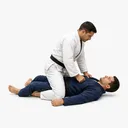
Mount
8 techniques
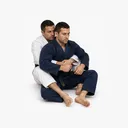
Back control
5 techniques
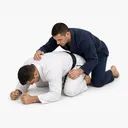
Turtle
3 techniques
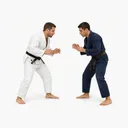
Standing
4 techniques
Example figures. Your game is whatever you put in it.
After training
Four words, and you are done
You are tired and you want a shower. Tap the techniques that came up and say what happened to each one. That is the whole job.
- WorkedYou got it, live.
- ProblemIt kept going wrong here.
- EscapedThey got out of it.
- DrilledPractised, not tested yet.
One session is a day of training, however much you put in it.
One session
2026-07-18
Scissor Sweep
Closed guard
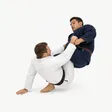
Hip Bump Sweep
Closed guard
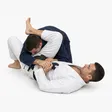
Armbar
Closed guard
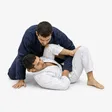
Elbow-Knee Escape
Mount, bottom
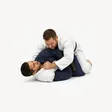
Arm Triangle
Side control, top
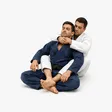
Rear Naked Choke
Back control
AnalysisPro
What is working, and what keeps stopping you
Your own sessions, counted. Choose how far back to look, and it compares that against the same number of sessions before.
Position analysis
Where your training actually happens, and how it goes there.
- Worked
- Problem
- Opponent escaped
- Drilled only
Results over time
Each session measured against itself, so a quiet week and a heavy one compare fairly.
Technique analysis
The 10 techniques you log most, drilling included.
- Worked
- Problem
- Opponent escaped
- Drilled only
Working best
Scissor Sweep
88% working, from 8 attempts that carried a verdict.
Closed guard
Needs work
Elbow-Knee Escape
75% going wrong. The part of your game costing you the most.
Mount, bottom
Strongest area
Guard
64% working across 36 observations here.
One of the six areas
Most escapes
Armbar
3 times opponents got out. Tighten the control before you commit.
Closed guard
What to work on
Ordered by how badly and how often something is going wrong. One bad night does not put a technique on the list.
- 167%
Armbar
Opponents are getting out of this one.
- 275%
Elbow-Knee Escape
This keeps going wrong in the same place.
- 350%
Cross Collar Choke
It is not landing often enough yet.
An example from ten logged sessions. Every figure comes from what you logged — and drilling counts as time on the mat, never as something that worked.
What nextFree
It tells you what to learn next, and why
Not a search box and not a syllabus. Next to Learn reads your game and your training outcomes, then ranks a short list of techniques that would actually fit.
- 1You log a sessionLog training
- 2The gap gets namedAnalysis
- 3Techniques get recommendedNext to Learn
- 4You get told what to do firstAI Coach
Next to Learn
A short list picked for your game — not everything this position allows.
- 1
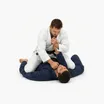
Ezekiel Choke
Closed guard · Submission
Why this
Armbar keeps getting shut down. This gives you another way through.
- 2
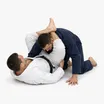
Triangle Choke
Closed guard · Submission
Why this
Armbar keeps getting shut down. This gives you another way through.
- 3
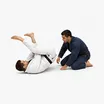
Reverse Shrimp
Closed guard · Movement
Why this
Fits the game you already play from Closed Guard.
- 4
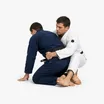
Arm Drag
Closed guard · Control transition
Why this
Fits the game you already play from Closed Guard.
What it reads
Your game
What is already in My Game, and which positions you play from.
Your outcomes
What has been working and what keeps failing, per technique and position.
The route graph
Where each technique leads, and which positions it opens up.
Recency
Counted in sessions, not dates — evidence older than eight stops counting.
Not the same as AI Coach
This is not the AI. It is a fixed set of rules over your game and your results, so the same training always gives the same list, and every entry tells you why it is there. AI Coach is the part that writes.
Same ten sessions as above. The first two are there because opponents keep escaping the armbar — exactly what Analysis found.
Your coachPro
A read on your game, after training
Analysis gives you the numbers. AI Coach reads them the way a coach reads a log — what is holding up, where it breaks, and the one thing to do about it next.
Scissor Sweep
88% worked · 8 observations
Consistently working
Guard
64% worked · 25 observations
Inconsistent results
Armbar
33% worked · 3 escapes
Opponents escape often
AI Coach
Written from the cards above
This has been a steady stretch, and the guard is doing most of the work.
The scissor sweep has turned into something you can rely on — it goes in early and you are getting the position off it rather than scrambling for it.
The armbar is the opposite story. You are arriving at it and then losing it, which is a holding problem rather than an entry problem, and the two need different work.
From under mount the difficulty starts earlier: the escape is not getting going, so there is nothing to lose hold of yet.
Those two are worth treating separately even though both show up as failures.
What is working
- Scissor sweep is dependable now, and it is carrying the guard.
- The posture break is going in consistently, which is why the guard opens at all.
What to work on
- They are getting out of the armbar after you have it. Holding it is the job before finishing it.
- The mount escape is not starting, which is earlier work than the finish.
Next focus
One priority: the armbar. Spend a round holding the position without attacking, so keeping it becomes its own skill before you commit to the finish.
Worded by a language model from the counted facts above, and you can report it in the app if it gets something wrong.
What it reads
- Your counted outcomes, per technique and per position
- Three time frames: all of it, the window you picked, and the one before
- What has turned around, stalled or started leaking
- What it told you to focus on last time
What it will not do
- It never sees your training log, only the counts
- It cannot invent a technique, a position or a trend
- It will not guess at your hips, grips or posture — the log records outcomes, not execution
Same ten sessions again. You get a new read once your training has moved on, not every time you open the screen.
Plans
What changes when you go PRO
Free is a real product: build your game, get recommendations, log your first 10 sessions. PRO is what turns a growing log into something that keeps telling you things.
Free
$0
No account needed to browse techniques
- The full techniques library
- My Game — build it position by position
- Next to Learn recommendations
- Your first 10 logged sessions
Nothing you log is ever removed, on any plan.
Pro
$4.99/month
or $39 a year — $3.25/monthSave 35%
Everything in Free, plus:
Keep logging past ten
The session limit comes off. Everything after it counts towards the same picture.
Analysis
Your positions and techniques counted, with the trend across the sessions you pick.
AI Coach
A written read of that: what is holding up, where it breaks, and one thing to do next.
No free trial. USD list price. Google Play charges in your own currency. It renews until you cancel, and it is managed in Google Play.

Start building your game.
Add what you already play, log your next session, and see what it tells you.
Free to start. Android first.